The Difference Between Stress and Burnout - and Why It Matters
Most people use the words stress and burnout interchangeably, as if they were different points on the same scale - stress being the milder version, burnout what happens when stress goes on too long. That's understandable, but it isn't quite accurate.
And the distinction matters, because what helps with stress and what helps with burnout are quite different things.
Getting that wrong - treating burnout as if it were stress, trying to push through or manage your way out of it - tends to make things worse rather than better.
What stress actually is
Stress is a response to demand. When there's more being asked of you than your current resources can comfortably meet - more work, more pressure, more responsibility, more uncertainty - the body and mind mobilise to meet it. Alertness increases. Focus sharpens. There's often a quality of being wound up that, in short doses, can be useful.
The problem is that this mobilisation isn't designed to be sustained indefinitely. The body has ways of recovering from stress - sleep, rest, time away from the source of pressure, the simple passing of the stressful period. When those recovery mechanisms work, stress is temporary. It rises and falls, and in the gaps between demanding periods, something returns to baseline.
Stress, in this sense, is uncomfortable and sometimes seriously so. But it isn't the same thing as burnout.
What burnout is
Burnout is what happens when the recovery doesn't happen. When the demand has been high for long enough, and the resources to meet it have been depleted far enough, that the system stops being able to mobilise at all. It isn't stress turned up to maximum. It's closer to the opposite - an exhaustion so deep that the normal stress response itself has stopped functioning properly.
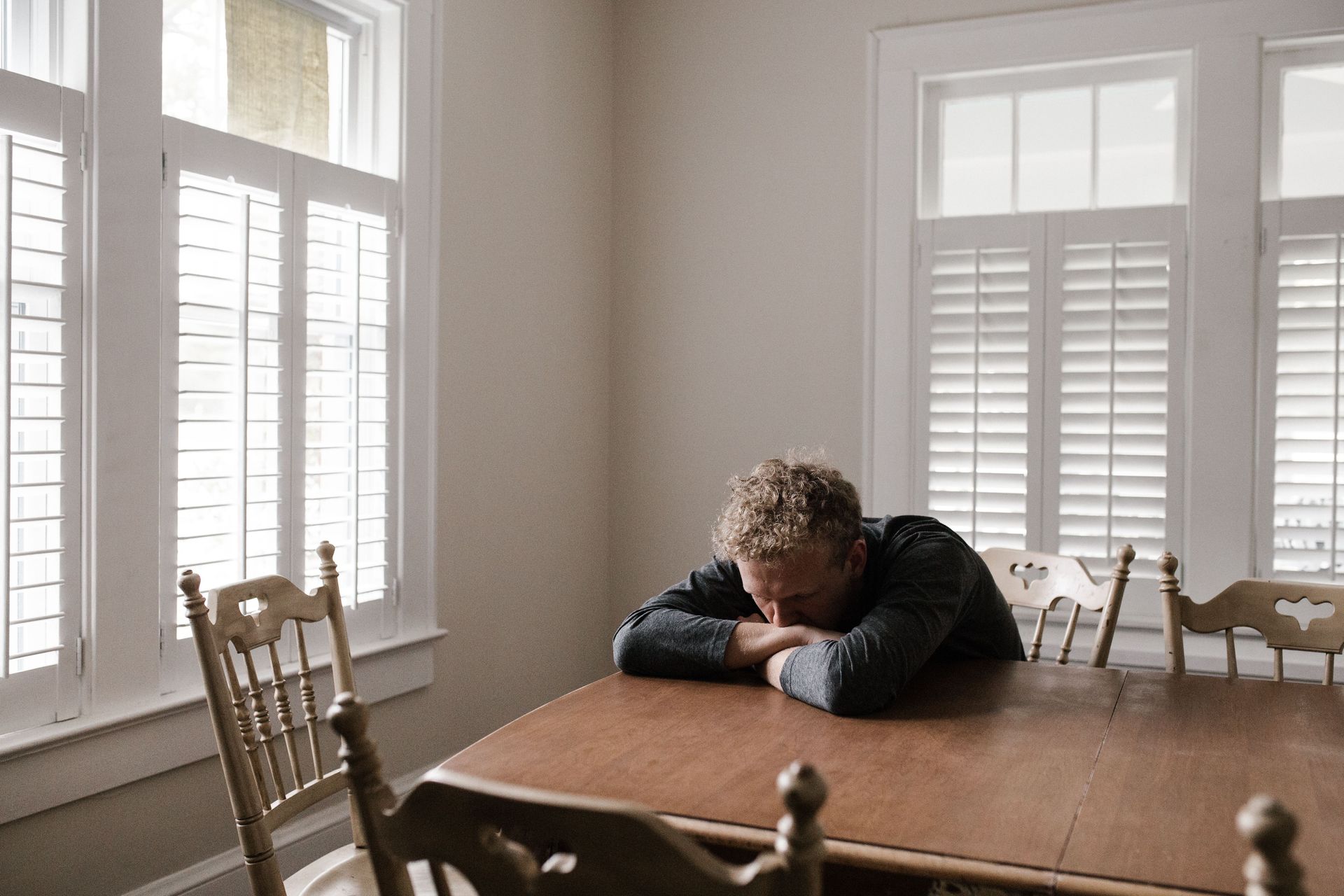
People in burnout often describe a flatness, a blankness, a sense of having nothing left. Where stress feels pressured and activated, burnout tends to feel empty. Things that used to matter don't. Motivation is absent not because you don't care but because the capacity to care seems to have gone somewhere you can't reach.
There's also often a cognitive dimension - difficulty concentrating, trouble making decisions, a mental fog that doesn't lift with rest in the way ordinary tiredness does. And an emotional dimension - a detachment, a going-through-the-motions quality, sometimes a kind of bitterness or cynicism that isn't characteristic of how the person usually is.
Burnout is frequently misidentified as depression, and the two can overlap. But burnout has a specific relationship to depletion through sustained demand, and recognising that is part of what shapes how to approach recovery.
Why the distinction matters for recovery
With stress, the most useful interventions tend to be about reducing demand, increasing support, and creating space for the natural recovery mechanisms to do their work. Sleep, rest, time away, the resolution of the stressful situation where possible. The system is still fundamentally functional - it needs relief, not rebuilding.
With burnout, that logic doesn't hold in the same way. Rest alone often isn't enough, at least not initially. People in burnout frequently find that they take time off and don't feel better - or feel marginally better and then return to where they were as soon as the demands resume. This can be confusing and demoralising, and sometimes leads people to conclude that they simply can't recover, rather than recognising that what they're doing isn't matched to what they're dealing with.
Burnout recovery tends to be slower and more fundamental. It often involves looking not just at what's been asked of the person externally, but at the patterns that led them to continue beyond the point where their own signals were telling them to stop. The difficulty saying no. The sense of responsibility for things that aren't theirs to carry. The identity that has become so bound up with functioning and producing that rest feels unbearable or pointless.
Those patterns don't resolve with a week off. They need a different kind of attention.
The role of therapy
Therapy isn't a cure for burnout in any straightforward sense. It doesn't remove the external demands, and it doesn't speed up the physiological recovery that the body needs to do in its own time.
What it can do is address the internal dimensions of it - the beliefs and patterns that made someone vulnerable to burning out, that kept them going past the point of sustainability, that make recovery itself feel difficult or undeserved. For a lot of people in burnout, there's something to understand about why they found it so hard to stop. Why they kept going when the signals were clear. What they were afraid would happen if they didn't.
That's genuinely useful work, and it tends to change not just the current situation but the person's relationship to their own limits more broadly.
Therapy can also offer a space where the flatness and the emptiness of burnout can be held without pressure to fix it or move on from it faster than is realistic. Sometimes being heard by someone who understands what burnout actually is - rather than treating it as stress requiring a solution - is itself part of what allows the recovery to begin.
If what you're carrying feels less like pressure and more like an absence of everything you normally run on, it might be worth having a conversation. I'm happy to talk through what's been going on and whether working together might be useful. Find out more about counselling here.